Anyone who has suffered from migraines knows how debilitating they can be. Pharmaceutical drugs do not always treat symptoms, which may include pulsating pain, blurred vision, and nausea. Now research shows medical marijuana may offer relief by reducing the frequency of occurrences.
“We were not expecting the decrease in frequency in migraines that we saw. It was pretty dramatic,” said Dr. Sarah Anderson with Skaggs School of Pharmacy at the University of Colorado Anschutz Medical Campus.” Researchers at CU Anschutz looked at dozens of charts from patients treated at Gedde Whole Health, a private Colorado clinic that prescribes medical marijuana for a variety of ailments.
In the study, which included 121 patients, 103 reported a decrease in monthly migraines with the average frequency dropping from ten per month to fewer than five. Researchers believe serotonin, a neurotransmitter that regulates feelings of wellbeing and happiness, plays an important role in managing migraine pain. Further research is suggested to study the link between brain chemistry and cannabinoids.
“This made us think about a lot more questions that we want answered, and so it would be ideal if we could design those prospective big, randomized clinical trials to look at this in more detail,” Anderson said.
Read the full study, published in Pharmacotherapy: The Journal of Human Pharmacology and Drug Therapy, and titled “Effects of Medical Marijuana on Migraine Headache Frequency in an Adult Population”.
Marijuana has been used therapeutically for a long time, but do you know exactly how long? As far back as 1800 BC, according to Cannabis Culture, when the ancient Egyptians used every part of the plant to address pain in the body. Since then, cannabis has been used medicinally by nearly every major culture throughout time. Sharing the plant’s deep history can help clarify some of the confusion that surrounds medicinal marijuana today.
“In 140-208 AD, the early Chinese surgeon Hua Tuo was the first recorded person to use cannabis as an anesthetic. He mixed a cannabis powder with wine for the patient in imbibe previous to surgery. Because of its widespread usefulness, cannabis became one of the 50 “fundamental” herbs in traditional Chinese medicine. Every part of the cannabis plant had a use in preparation of topical solutions intended to heal the skin or prevent baldness or greying of hair.”
“In modern times, marijuana as a scientifically-backed medicine is growing in popularity. There are whispers that medical marijuana is going to be moved from a Schedule 1 drug to a Schedule 2 drug, which will allow a wider range of scientific examination. Perhaps this is another step in the right direction that will allow marijuana to be used by all, legally.”Time for a quick history lesson: see how medical marijuana has been used throughout the ages in this video!
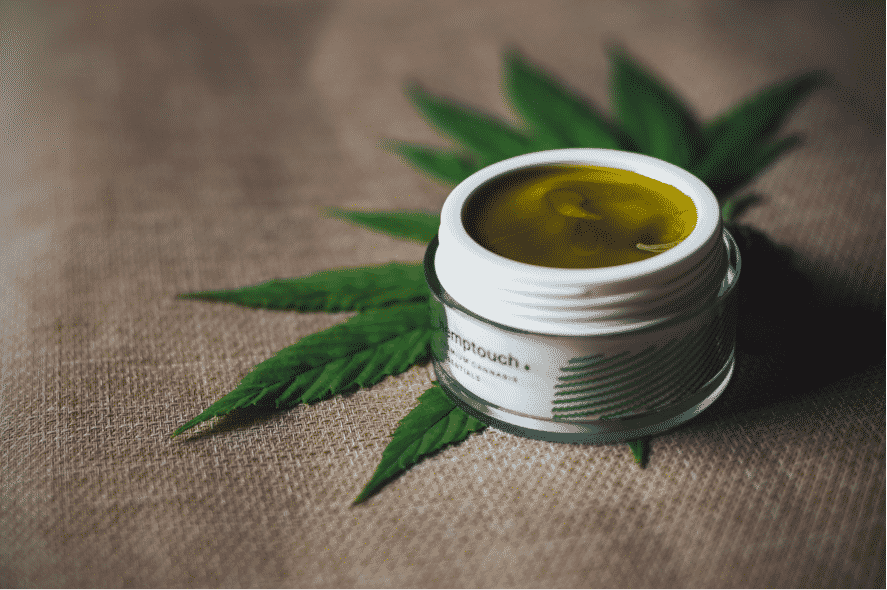
Topical CBD (balms, oils, and lotions infused with cannabidiol) are popular with patients for offering localized relief of pain and soreness without psychoactive effects. Now research shows topical cream containing one percent purified CBD, a component of cannabis, may also help reduce damage from diseases that cause brain inflammation such as multiple sclerosis.
In the study, CBD topical cream was used on healthy mice with experimental autoimmune encephalomyelitis (EA) – the most common form of MS. Researchers found that treatments with the CBD cream helped to reduce EA symptoms including loss of muscle function and inflammation.
“The results of this study provide further support for the potential of cannabinoids in reducing damage caused by autoimmune/inflammatory diseases like multiple sclerosis. More uniquely, however, they show that cannabinoids may produce beneficial biological effects even when only applied to the skin, as opposed to typical internal administration (e.g. edibles, vaping, smoking).”
Read the full study, published in Daru: Journal of Faculty and Pharmacy, Tehran University of Medical Sciences and titled, “A New Formulation Of Cannabidiol In Cream Shows Therapeutic Effects In A Mouse Model Of Experimental Autoimmune Encephalomyelitis.
Helping your patient determine the most efficacious dose for his or her condition may mean suggesting a dose that is much less than thought. Dosing expert and Medical Director of Interg8 Health Dustin Sulak—who was a featured speaker at the Holistic Cannabis Summit in April—shares his findings in a recent article.
“Over time, I began to notice that most patients using small amounts of cannabis were getting better and more sustainable results than their high-dosage counterparts with similar conditions. Eventually I discovered that most people have a certain threshold dosage to cannabis, below which they’ll actually experience a gradual increase in benefits over time and above which they’ll start building tolerance, experiencing diminishing benefits and more side effects.”
With his sensitization protocol program, which resets the patient’s endocannabinoid system, Dr. Sulak has over time decreased patients’ doses to as lows at 3-5 mg, while improving health outcomes. “This reduction not only reduces side effects—it saves patients a lot of money and potentially makes cannabis available for those with limited access.”
Marijuana offers many therapeutic benefits for supporting mood and overall wellbeing including reducing anxiety and depression. Now research suggests that the cannabinoids responsible for these effects (THC & CBD) are significantly helping patients with bi-polar disorder.
“Researchers at the University of Oslo in Norway published the results of a study conducted on 133 bipolar patients. What they found was that patients who used cannabis regularly actually performed better than non-users on tests of verbal fluency and learning.
In another study, researchers at the Zucker Hillside Hospital in New York found that regular marijuana use was linked to higher levels of attention, processing speed and memory among the 200 bipolar patients that the researchers followed over a 9-year span.”